Field Experience
Tank and Pipeline Chemical Cleaning: Methods, Preparation and Surface Inspection
Material compatibility, degreasing, circuit preparation, surface inspection and the Ahal GTG project reference for process tanks and pipelines.
Scope of tank and pipeline chemical cleaning
Cleaning of process tanks, storage tanks and pipelines is planned around surface use and contamination. Fabrication residues, oils, oxides and operating deposits can require different assessments. A spool is a prefabricated pipe assembly prepared for site installation. Cleaning separate spools and circulating a solution through a connected process circuit require different arrangements. P&IDs, equipment lists and connection information establish the scope of tanks, pipe groups and connected equipment.
Carbon steel and stainless steel assessment
Material grade, surface condition and service fluid inform method selection. For carbon steel, surface protection after deposit removal is considered. For stainless steel, degreasing, oxide removal and passivation serve different purposes. Passivation is not the same operation as removing heavy oxide or thick deposits. Selection considers more than the main pipe material: connected equipment, seals and other wetted materials in temporary piping must also be assessed.
Why degreasing and deposit removal are planned separately
Oil and grease differ from oxides and mineral deposits. The procedure defines degreasing, required surface treatment and rinsing in a sequence suited to contamination. Acidic and alkaline stages are not a standard recipe applied together to every surface. Weld areas, access and surface condition also inform selection. Product, concentration, temperature and duration are established against project specifications and compatibility. The objective is the surface condition required for subsequent processing or service.
Separate spools versus connected circuits
For separate pipe assemblies, suitable bath or surface application methods can be assessed. Tank and connected circuit arrangements depend on connections, access and circulation possibilities. Geometry and the approved procedure determine the selected method. Component cleaning requires identification and post-treatment handling plans; circuit cleaning requires isolation, supply, return, venting and drainage arrangements. Component counts, bath dimensions or pump lists proposed for one project cannot be transferred directly to another design.
Temporary connections and site preparation
Circuit volume, flow paths and pressure losses inform pump and temporary piping assessment. Sampling points and monitoring arrangements are established with the procedure. Water, power, access, lifting, drainage and waste collection are planned before execution. Equipment excluded from the cleaning scope is clearly identified. Agreement on waste collection, treatment and disposal responsibilities connects cleaning and rinsing stages with site organisation.
Surface inspection and acceptance criteria
Stage endpoints, rinse requirements and surface acceptance criteria are defined before work begins. Visual inspection and specified analysis or other methods are considered according to service requirements. Photographs of accessible surfaces document the work but do not alone establish acceptance of the entire circuit. Inspection scope, responsible technical teams and hold points are agreed in writing. Results, deviations and required repeat operations are included in execution records.
Tank and pipe work at Ahal GTG-INT
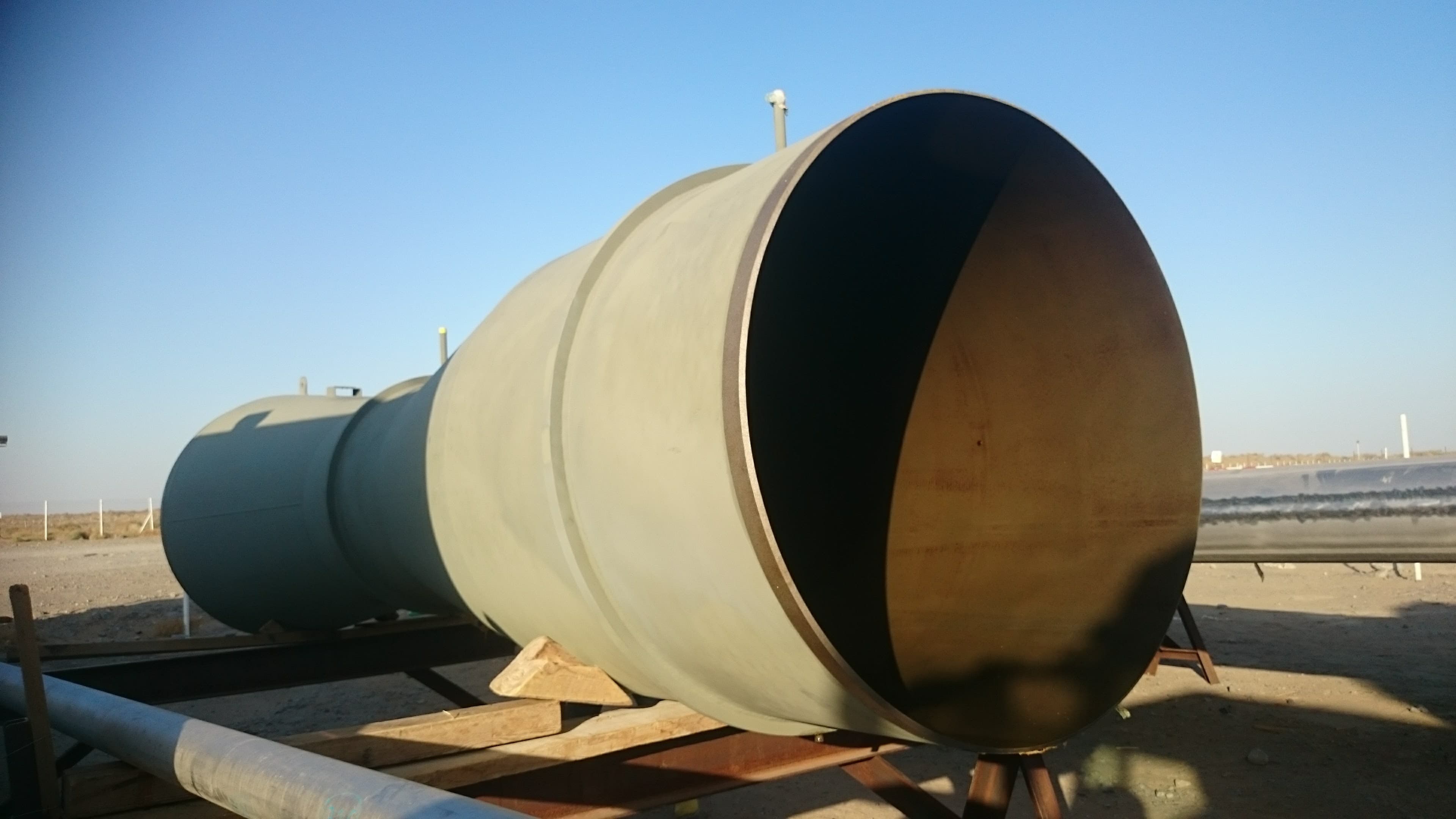
The Kelven Kimya service presentation lists acidic and alkaline chemical cleaning of stainless steel spools, liquid storage tanks, oxygen and nitrogen tanks and specified process systems within its Ahal GTG-INT references for 2016–2019. The large diameter pipe photograph comes from this archive. Dated proposals in the presentation also describe planned methods and equipment; proposed quantities are not treated as completed quantities. The reference illustrates why different surfaces and services require separately defined cleaning packages.
Oxygen-contact surfaces: the Ahal application note
The Ahal field note specifies zero tolerance for oil residues on oxygen-contact surfaces and records inspection in darkness using a dedicated lamp after cleaning. This is a project application note, not a universal inspection standard or certification statement. For new projects, service conditions, specifications and acceptance methods must be agreed by the responsible technical teams. Post-cleaning handling, closure and storage also form part of the plan to prevent recontamination.
Preservation and handover records
After rinsing and required completion stages, surface protection until commissioning is planned. Drying, end closure, identification and suitable packaging may be considered for components; connected systems require project-specific preservation. These operations are not identical in every project. The contractual handover scope establishes required procedures, execution logs, analysis and inspection results and preservation instructions. Sharing materials, volumes, contamination, access and schedule together supports a clearly defined quotation.
Technical assessment checklist
- P&IDs, equipment lists and tank/spool/circuit boundaries
- Material grades, seals and intended service fluid
- Volume, geometry, contamination and available analyses
- Connections, access, water, power and drainage
- Inspection, acceptance, preservation and handover requirements
- Shutdown schedule and waste management responsibilities
Frequently Asked Questions
Is passivation the same as chemical cleaning?
They serve different purposes. Degreasing and deposit removal address contamination, while passivation is assessed after suitable preparation against the specification. It cannot automatically replace heavy oxide removal.
Are spools and tanks cleaned using the same method?
Geometry, materials, access and intended service determine the method. Bath treatment, surface application or circulation are assessed within the project procedure.
Is lamp inspection alone sufficient for oxygen tanks?
Acceptance follows project specifications. The Ahal lamp inspection note does not establish universal sufficiency or certification for oxygen systems.
How are cleaned components protected?
Drying, closure, packaging or system preservation is defined according to materials, storage duration and commissioning conditions.